How Field Operations Leaders Vet Firms That Surface Workflow Failures Before an AI Roadmap Exists
Leaders should vet firms on diagnostic rigor, not technology promises, before approving AI.
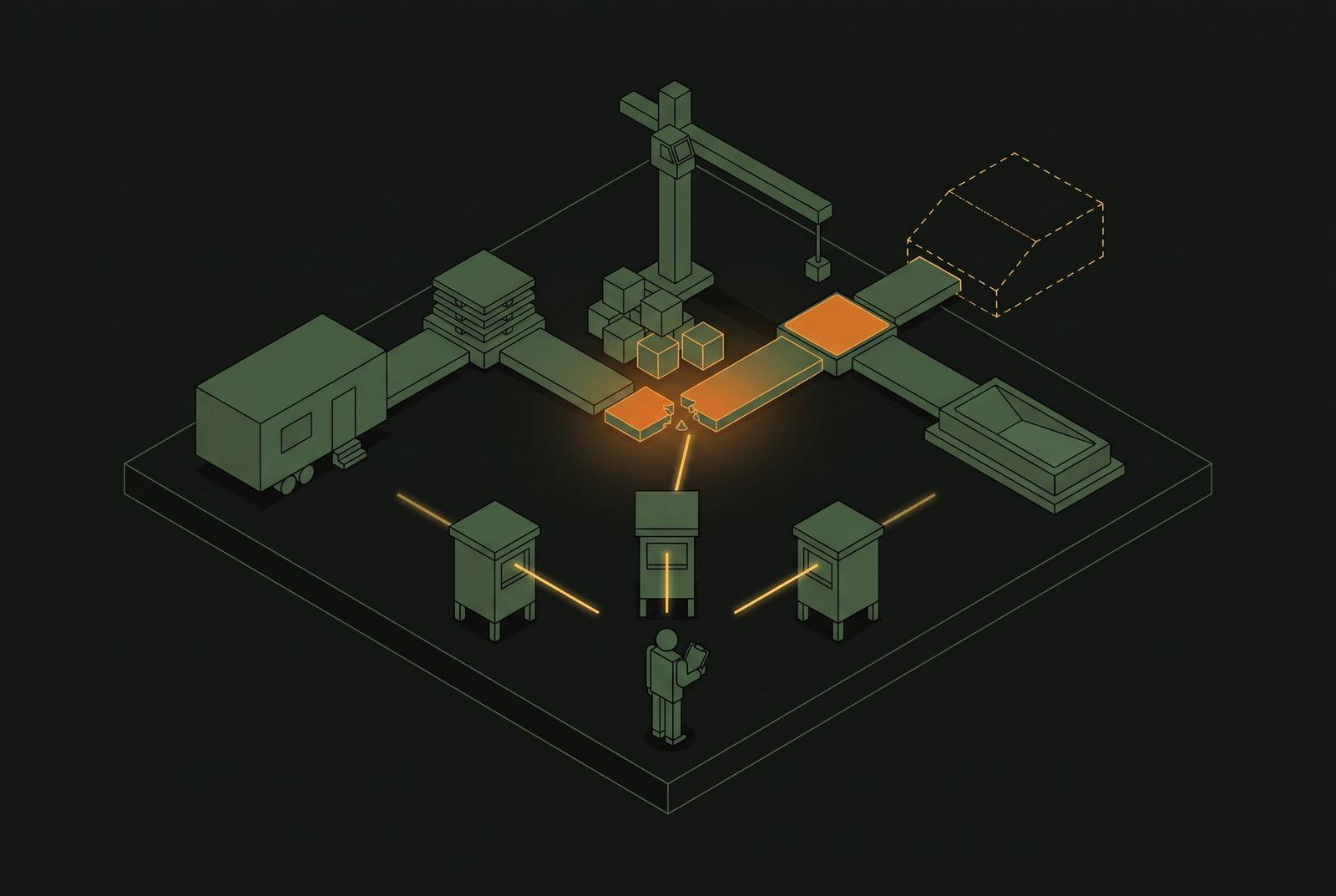
A process audit before AI deployment in construction and logistics operations should find where handoffs break before it recommends technology. Field operations leaders can vet prospective firms by asking them to trace real work, distinguish recorded activity from actual behavior, and produce a prioritized failure map. The strongest evidence is not a methodology claim but a specific account of what broke, where, and why.
Why the pre-roadmap vetting question matters more than the technology question
An operations leader sits across from a prospective firm before any AI roadmap is on the table. The firm can begin with platforms and potential use cases, or it can ask how work moves through the operation. That choice sets the direction of the engagement. Once budgets and vendors are approved, the firm risks fitting the problems it finds to a solution already chosen.
The dominant failure mode is selecting technology before mapping what is broken. AI layered onto a failing process can accelerate the failure. McKinsey’s State of AI finds that problems with how organizations work and manage change do more to hold back scaling AI than technical limitations do. In that first conversation, the leader therefore has unusual leverage to test whether the firm can investigate without presupposing the answer. Once a roadmap exists, the firm has an incentive to defend it.
What field workflows actually look like when they break — and why firms miss it
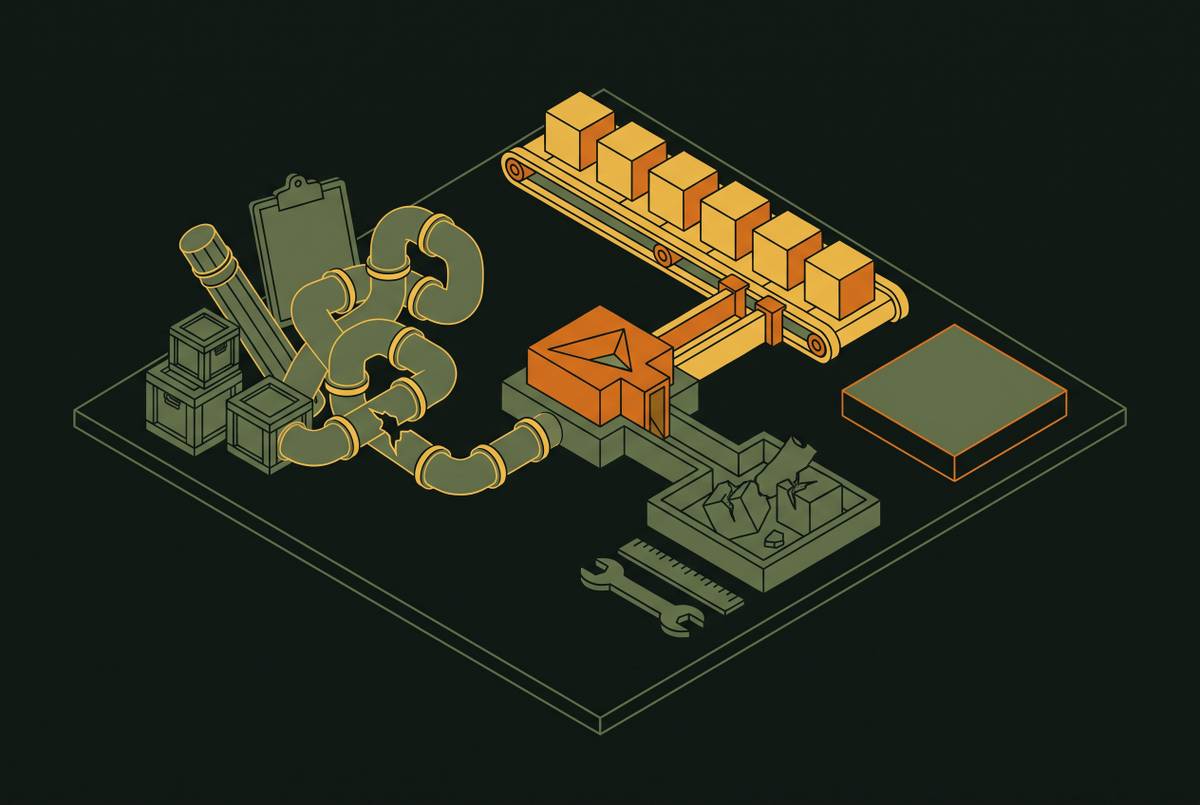
Construction, manufacturing, and logistics share a recognizable failure pattern. Tools exist and meetings happen, but handoffs between people and systems remain disconnected. A documented construction audit found HubSpot for sales, Excel schedules on internal servers, and estimating and financial data in separate software. Project managers bridged the gaps manually. Each system contained part of the work, while the connection between them depended on people.
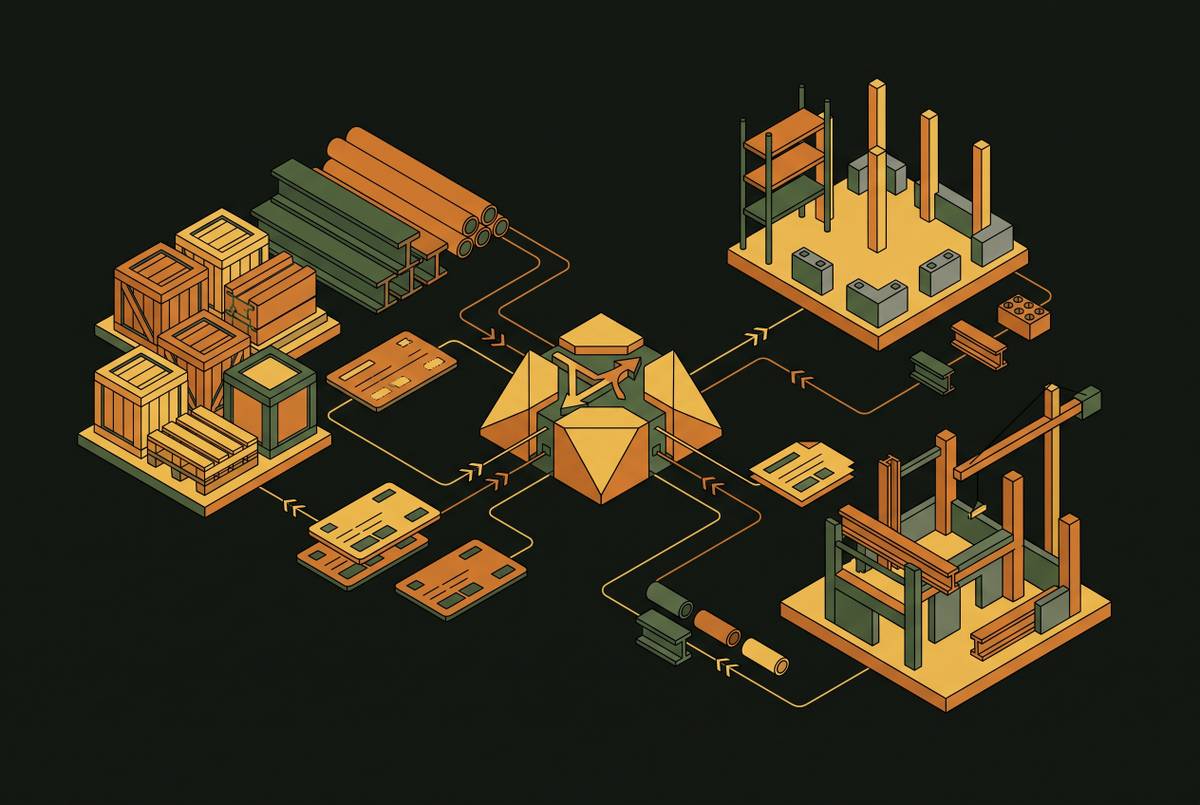
Those gaps become consequential when timing is unforgiving. Long-lead items, including structural steel, large transformers, chillers, switchgear, custom curtainwall, and elevator packages, have lead times of eight to twenty-plus weeks. If procurement does not start within days of project award, the schedule is already at risk. Energization introduces a different dependency. A project can clear permitting, secure equipment, and finish construction on schedule yet remain unpowered for months because commissioning and startup were collapsed into one activity. Errors in the documentation cause a large share of those delays, even when there are no technical faults.
Machines have quirky behaviors, maintenance histories are fragmented, and supplier delays go untracked. A tool that reduces scrap in one plant may be irrelevant or risky in another. The plant is not a spreadsheet. Operators can also work around enterprise AI that was not built for the shop floor, making the workaround the operating process. Only a minority of manufacturers describe themselves as fully AI-ready.
Logistics has its own fragmented record of work. Data is spread across ERP modules, old legacy systems, paper maintenance logs, and radio communications that were never recorded. A majority of organizations estimate that their data is not AI-ready for current or future use cases. A firm that looks only at software and written procedures sees the process on record, which may differ from how goods actually move.
What should a company audit before implementing AI in field operations?
The standard for a prospective firm has three levels. The first is the declared process, including the SOP, the process map on the wall, and the account given by those responsible for the work. This establishes what is supposed to happen. It does not establish what happens in practice.
The second level is observed behavior, traced through a real transaction or handoff. The firm should establish where work sits, who touches it, what information is missing when it arrives, and what happens outside the system. Construction procurement makes the distinction concrete. Enquiries may be sent individually by email, with responses spread across inboxes and no central record of invited suppliers or quoted prices. Individuals then hold the procurement knowledge that the organization lacks, even if the declared process looks complete.
The third level is systemic failure, where separate activities occur but their connections fail. A Goods Receipt Note may be raised on paper without being entered into the system, quantities may go unchecked against the PO, and finance may process an invoice against the PO alone. The defect lies between the individual activities. Factories first put electric motors into operating models built for steam, but got more work done when they redesigned those models around what the motors could do. A firm that never reaches systemic failure cannot establish where comparable redesign is needed for AI.
Specific firm behaviors that reveal diagnostic depth before a proposal exists
For a leader evaluating a firm, the practical test begins with what it asks to see. A thorough firm asks to see a real transaction, procurement cycle, or commissioning sequence because a deck alone is too little evidence. It asks who actually performs each step. A firm that accepts the description and moves directly to recommendations has skipped the central diagnostic task.
The next test is where its questions concentrate. Watch for attention to handoffs. Where does information go after this step? Who receives it, in what form, and what happens when it is incomplete? Submittals, RFIs, and procurement logs in construction expose these boundaries, as do customs clearance, goods receipt, and invoice matching in logistics. A discussion that remains inside individual tasks can miss the point at which otherwise competent work stops connecting.
Ask how the firm would distinguish an absent system entry from work completed on paper or communicated by radio. The record is not the whole operation. Procurement knowledge held by individuals presents the same problem in another form, because a system review alone cannot show everything those people know. The firm’s response should explain how it investigates that gap rather than treating the available data as a complete account.
The conversation should then narrow to a specific, painful process. A platform strategy or broad transformation roadmap is not a substitute for identifying that starting point. Before work begins, the firm should be able to describe what the diagnostic will map, which kinds of failure it will name, and what output the leader will receive. The promised output makes the method testable. Without it, a claim of diagnostic rigor remains difficult to distinguish from a sales position.
What the deliverable from a real process audit should contain
A genuine diagnostic produces a visual map of the workflow as it runs, with handoffs marked where information stalls, changes form, or disappears. The map should name the failure at each boundary. “Procurement visibility is low” does not meet that standard. An account of individually emailed enquiries, scattered responses, and the absence of a central supplier record does. The latter identifies a mechanism that the leader can compare with operational evidence.
The output should also prioritize failures by downstream damage. In construction, late identification of long-lead items creates compounding schedule risk that cannot be recovered later. In manufacturing, fragmented data across legacy systems can leave an AI system working from bad inputs and at risk of hallucination. These require more than a common label. The audit should distinguish process failures from data failures because the remedies, and therefore the appropriate starting points, differ.
A technology recommendation follows the diagnostic’s failure map. Abstract maturity ratings and a multi-quarter roadmap issued before a single process has been validated in production are similarly weak substitutes. The deliverable must make the present failure specific enough to evaluate before committing to a future architecture.
The 100-km highway audit provides a useful negative benchmark. It uncovered a non-updated WBS, a stale risk register, and no stakeholder communication after Phase 2, but the delay and cost overrun had already materialized. The failures became visible after the damage occurred. A pre-roadmap audit should find such gaps while they can still help guide the choice of where to start.
The agentic AI counter-argument and why it does not dissolve the vetting requirement
The strongest objection is that agents can now observe and adjust operations themselves. Agentic systems in 2026 monitor hundreds of variables and make autonomous adjustments across supply chains. C.H. Robinson’s freight-quoting agent increased quote coverage from roughly sixty-five percent to one hundred percent while reducing average response time from a lengthy wait to seconds. Allianz’s seven-agent claims system cut the time spent on processing and settlement by a large amount. Why ask for a human-led audit if agents can find failures as they work?
The answer depends on what reaches production at scale. A large majority of enterprise AI agent pilots have not done so, with governance gaps, untraceable actions, insufficient monitoring, and fragmented ownership among the chief bottlenecks. A pre-roadmap diagnostic examines the same boundaries by establishing who owns decisions, how actions are recorded, and what happens when an agent is wrong. Autonomous observation does not by itself settle those responsibilities.
Deloitte’s 2026 survey of leaders found that only a quarter had moved forty percent or more of their AI pilots into production. That finding covers AI pilots as a whole, without a separate measure for agent pilots. The distinction is important to the evidence. McKinsey’s State of AI 2026 survey, fielded among over seventeen hundred respondents across nearly one hundred nations, reports agent scaling in at least one function among a substantial share of large organizations. Those responses indicate reported adoption, but they are not audited deployment counts. Neither measure supports treating the operational prerequisites as solved.
Allianz’s agents perform workflow planning, data security, coverage verification, weather checks, fraud checks, payout calculation, and audit summarization, while a human claims professional makes every final payout decision. Telus validated value one narrow use case at a time and expanded on proven results. The starting scope remained deliberately constrained. These examples show capable agents working within clean process architecture, with the need to build that architecture still in place.
How to apply a field-evidence standard to a firm’s own claims
The same distinction between declared process and observed behavior applies to the prospective firm. For the buyer, the next step is to ask for a case in which diagnosis changed the starting point. The firm should explain what the client first wanted to fix, what it found when it looked into the work, and why that failure did more harm. A changed recommendation is revealing evidence of diagnosis.
Ask next for the specific handoff failures uncovered in a past engagement and evidence that a first process reached production. A pilot or proof of concept is not a live workflow. The before-and-after account should describe the operation. It should also identify who on the team has done this work in the field. Engineers who have rebuilt operations should be able to explain the failure mechanism.
The absence of that account is itself a signal. Case studies that report outcomes without describing the original failure leave the diagnostic claim unsupported. A roadmap issued before the audit is done, a technology recommendation made before anyone sees the process run, or a wait of quarters rather than weeks for the first live process calls for a closer look. Evidence should take precedence over presentation. Product documentation and deployment terms deserve more weight than marketing materials, while an annual report or pressroom filing deserves more weight than a firm’s account of its own success.
The selection decision should rest on what the firm can demonstrate before it asks the leader to commit. Its evidence should link a failure it saw, a reason for choosing where to start, and a result from a process running in the field. That establishes whether the firm can expose the conditions under which deployment would otherwise fail. Before a roadmap exists, that is the capability the buyer is hiring.